Yoga has become a popular practice among people of all age groups and of all backgrounds. Many are finding that it helps enhance their lives, improves their physical health and balances their mental health. It allows them to focus, to stay present, to relax and to connect with their body. However, even the most experienced yogis may not have heard of yin yoga.

This style of yoga is only recently being introduced in the United States and other western nations. Here’s everything that you need to know about yin yoga:
What is Yin Yoga?
Yin yoga is a yoga practice that is unlike many of the most popular forms of yoga practice, including vinyasa yoga. Rather than focusing on a vast array of poses that are held for a short period of time, yin yoga focuses on about 20 core poses that are held for much longer periods of time. Those who practice yin yoga are often able to hold their poses for at least 5 minutes, with some keeping the pose for up to 20 minutes.
The poses that are used in yin yoga are designed to connect the mind with the deep connective tissues of the body. It perfectly combines meditation with physical strength and endurance, increasing the individual’s presence of mind and flexibility. Yin yoga is often described as a more passive yoga practice, and its poses often focus on stretching the joints in the body around the spine, knees and pelvis.
Props that Can Help Your Yin Yoga Practice
Those who are more accustomed to practicing yang-style yoga likely try to avoid using props, as it is often viewed as a way of making yoga practice easier and therefore less beneficial. However, in yin yoga, props are encouraged as they can help the individual achieve the right physical results. This is a practice that focuses more on the physical aspect than the mental and spiritual aspect.
These are a few props that you may want to consider if you begin practicing yin yoga:
- Cushions
- Blocks
- Blankets
- Bolsters
- Straps
If you do not want to purchase yoga props from a supply store, you may use household items to improvise. Rolled up towels, for example, work well as cushions or bolsters, while a stack of hardcover books can transform into a yoga block.
Where Can You Practice Yin Yoga?
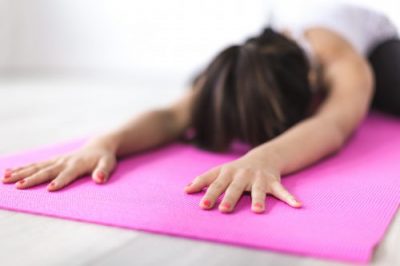
You can practice yin yoga in any space that feels comfortable for you. Beginners should consider going to a local yoga studio or community recreation center where an instructor may be available to guide them in their new practice. An experienced yin yoga instructor will be able to assist with poses and make sure that you are completing the poses properly. It’s particularly important with yin yoga to achieve the right stance and posture, as these poses are designed to provide physical benefits.
While working with a yin yoga instructor is advisable, it’s certainly not necessary. You can use guided yin yoga videos to practice yin yoga in your own home. You should find a private, quiet space that has ample room for stretching, and begin your practice there. Be sure to monitor your body for signs of distress or disruption, and stop if you feel you are working your body too hard.
Is Yin Yoga Right for Me?
Yin yoga is the right yoga practice for anyone who wishes to try it. There are certain groups of people that may find yin yoga to be particularly advantageous, such as those who are hoping to improve their joint health or those who want to increase their flexibility as they age. Young people, elderly people, injured people, pregnant women and more all can consider yin yoga as part of their yoga practice. The most important thing to consider when beginning a yin yoga practice is your own personal goals, your current health condition and your own body limits. By working with a yin yoga expert or instructor, you can create a yin yoga routine that allows you to relax your mind and reconnect with your body while achieving physical results.
Yin yoga offers new and experienced yogis with an opportunity to take a different approach to their existing practice. It is a beneficial supplement to any yoga routine, yet it should not be relied upon for an exclusive form of exercise. Those who are interested in trying yin yoga should work with an instructor and discover how to best incorporate yin yoga into their daily lives.
Until next time, here’s to yin!
Sincerely,
Jill Schoenberg
a Lover of Yin Yoga and Life